Bold comments drive results. Over 80 percent of American consumers trust brands that actively engage on social media, proving that every reply matters more than you think. For founders and freelancers in tech startups, mastering comment marketing transforms simple interactions into opportunities for meaningful visibility and relationship building. Here you will discover practical ways to shape brand perception through intentional comment strategies, empowering you to stand out and build loyal audiences across digital platforms.
Table of Contents
- Defining Comment Marketing for Branding
- Types of Social Comments With Impact
- How Comment Strategies Build Brand Trust
- Practical Workflow for Authentic Engagement
- Risks and Mistakes in Comment Marketing
Key Takeaways
PointDetailsComment Marketing is EssentialComment marketing enhances brand identity through targeted digital interactions that foster engagement and public perception.Understand Comment TypesDifferent comment types serve distinct functions; positive comments build goodwill while negative ones provide critical feedback.Build Trust Through ConsistencyBrand trust is developed through cumulative, authentic comments that reflect expertise and empathy towards audiences.Mitigate Risks EffectivelyImplement moderation and oversight to manage risks such as incivility and misinformation in comment marketing strategies.
Defining Comment Marketing for Branding
Comment marketing represents a strategic approach to building brand identity and reputation through purposeful online interactions. In contemporary digital landscapes, brands recognize that comments are no longer peripheral communication channels but critical touchpoints for engaging audiences and shaping public perception.
At its core, comment marketing involves intentional, targeted engagement across digital platforms where brands strategically insert comments that add value, spark conversations, and subtly promote brand awareness. Contemporary branding strategies demonstrate how systematic comment interactions can transform passive audience consumption into active brand relationship building. These interactions go beyond simple promotional messages, focusing instead on creating genuine connections through meaningful dialogue.
The research underscores that effective comment marketing requires nuanced understanding of audience dynamics. Marketing and branding investigations reveal that successful comment strategies involve three primary dimensions: context relevance, authentic communication, and strategic brand positioning. Brands must craft comments that feel natural, provide genuine insights, and subtly reinforce their core messaging without appearing overtly promotional.
Pro tip: Develop a consistent brand voice and persona for your comment marketing efforts to ensure authenticity and recognize high-engagement posts where strategic comments can generate maximum visibility.
Types of Social Comments With Impact
Social comments represent a diverse ecosystem of digital interactions, each carrying distinct potential for brand engagement and audience perception. Understanding the nuanced taxonomy of comment types becomes crucial for marketers seeking to leverage online discourse effectively.
Research reveals several key comment categories with significant impact. Online comment valence studies demonstrate that comments can be categorized into positive, negative, and neutral types, each producing unique psychological and behavioral responses. Positive comments tend to generate favorable brand associations and encourage community building, while negative comments can provide critical feedback and opportunities for brand responsiveness. Neutral comments often serve as potential conversion points, offering brands a chance to demonstrate expertise and add contextual value.

Furthermore, systematic reviews of user interactions highlight sophisticated comment typologies beyond simple emotional valence. These include informative comments that provide additional context, conversational comments that spark dialogue, supportive comments that validate content, and critical comments that challenge existing perspectives. Each type serves a unique function in digital communication, presenting brands with strategic opportunities to engage, learn, and refine their messaging.
Complex comment ecosystems demand nuanced understanding. Brands must recognize that comment impact extends beyond immediate visibility, influencing long-term perception, trust, and audience relationship development. Sophisticated comment marketing strategies involve active listening, contextual responsiveness, and strategic engagement across these diverse comment types.
To clarify the functions and outcomes of different social comment types, see the table below:
Comment TypePrimary FunctionBusiness ImpactPositiveFoster goodwillBuilds brand reputationNegativeDeliver critical feedbackEnables responsive improvementNeutralOffer conversion pointsOpportunity to showcase expertiseInformativeAdd contextual valueEstablishes thought leadershipSupportiveValidate contentStrengthens audience loyaltyCriticalChallenge perspectivesDrives ongoing brand adaptation
Pro tip: Develop a systematic approach to categorizing and responding to different comment types, creating tailored response protocols that align with your brand’s communication strategy and audience expectations.
How Comment Strategies Build Brand Trust
Brand trust emerges as a complex psychological construct fundamentally shaped by consistent, authentic digital interactions. Modern consumers seek transparency and genuine connection, making comment strategies a critical mechanism for establishing credibility and emotional resonance with audiences.
Communication strategies in digital platforms reveal that brand trust develops through cumulative interactions rather than isolated moments. Successful brands recognize that each comment represents an opportunity to demonstrate expertise, empathy, and reliability. These interactions progressively build a narrative of trustworthiness, with informational, emotional, and interactive comment approaches playing distinct roles in creating comprehensive brand perception.
Understanding the strategic architecture of trust-building requires deep insight into consumer psychology. Online brand communication frameworks identify four critical stages of brand trust development: interaction, identification, internalization, and bonding. Comments serve as pivotal touchpoints in this journey, reducing emotional uncertainty and providing tangible evidence of a brand’s commitment to meaningful engagement. By crafting comments that are contextually relevant, professionally articulated, and genuinely helpful, brands can systematically erode consumer skepticism and construct robust trust foundations.
Moreover, trust-building through comments demands a nuanced, multidimensional approach. Brands must balance professional expertise with human authenticity, creating comment strategies that feel simultaneously knowledgeable and approachable. This delicate equilibrium transforms digital interactions from transactional exchanges into meaningful relational experiences that resonate deeply with target audiences.
Pro tip: Develop a comment engagement protocol that emphasizes consistent tone, rapid response times, and value-added insights to systematically build trust across digital platforms.
Practical Workflow for Authentic Engagement
Authentic digital engagement requires a strategic, intentional approach that transcends traditional marketing tactics. Brands must develop sophisticated workflows that balance technological efficiency with genuine human connection, creating meaningful interactions that resonate with audiences.
Authentic engagement strategies emphasize the critical importance of integrating personal narratives with technological support. Successful workflows involve a multi-step process that begins with understanding platform-specific dynamics, audience preferences, and the delicate balance between automated tools and human touch. This means leveraging AI to enhance, not replace, genuine human interaction, ensuring that each comment feels personalized and contextually relevant.
Social media brand loyalty strategies reveal that authentic engagement workflows must incorporate key performance indicators that go beyond surface-level metrics. Brands should develop a systematic approach that includes real-time monitoring, rapid response protocols, and continuous refinement of communication strategies. This involves creating a comprehensive framework that allows for dynamic interaction, where automated tools provide initial support, but human insight drives the deeper engagement.

The most effective engagement workflows are characterized by transparency, adaptability, and a commitment to value creation. Brands must design processes that allow for immediate context recognition, rapid response capabilities, and the ability to pivot communication strategies based on audience feedback. This requires a sophisticated blend of technological tools, data analytics, and human intuition that transforms digital interactions from transactional exchanges to meaningful conversations.
Pro tip: Develop a flexible engagement protocol that combines AI-powered insights with human empathy, creating a responsive workflow that adapts to real-time audience interactions and maintains authentic brand voice.
Risks and Mistakes in Comment Marketing
Comment marketing represents a nuanced digital strategy fraught with potential pitfalls that can rapidly undermine brand credibility. Understanding these risks becomes paramount for organizations seeking to leverage online interactions without compromising their reputation or audience trust.
Comment marketing risks reveal significant challenges in maintaining discourse quality, particularly around issues of incivility, misinformation, and potential trust erosion. Brands must recognize that automated or poorly managed comment strategies can quickly transform from engagement tools to reputational liabilities. The dangers include algorithmic bias, inappropriate responses, context misinterpretation, and unintended messaging that might alienate target audiences.
Digital marketing research methods highlight critical methodological errors that can distort comment marketing effectiveness. Common mistakes include confirmation bias in data interpretation, over-reliance on automated tools, inadequate audience segmentation, and failure to develop contextually appropriate response protocols. Sophisticated brands must implement rigorous validation processes that continuously assess comment performance, audience reception, and potential reputational risks.
Moreover, successful comment marketing demands a proactive approach to risk management. This involves developing comprehensive moderation guidelines, training human moderators, implementing sophisticated AI filtering mechanisms, and creating adaptive response frameworks that can quickly identify and mitigate potential communication disasters before they escalate.
Here is a breakdown of common comment marketing risks and mitigation strategies:
Risk TypeExampleMitigation StrategyIncivilityHostile responsesActive moderation and filtersMisinformationIncorrect claimsFact-checking with human oversightAlgorithmic biasSkewed responsesDiversify training datasetsContext misinterpretationOff-topic repliesUse advanced AI to assess contextConfirmation biasData misreadingRegular review by analysts
Pro tip: Establish a comprehensive comment risk assessment matrix that scores potential engagement strategies across dimensions of relevance, tone, audience sensitivity, and brand alignment before implementation.
Elevate Your Brand Trust and Engagement with Authentic Comment Marketing
The article highlights the challenge many brands face when trying to build authentic connections through strategic comment marketing. It reveals how maintaining context relevance, authentic communication, and consistent brand voice is essential to foster trust and drive meaningful audience interaction. If you are struggling to monitor high-engagement posts and respond with timely, natural comments that align with your core messaging, you are not alone. Many marketers find it difficult to balance human authenticity with scalability — a gap that often delays brand trust development and limits impact.
Commentions.com is designed to solve this exact problem. Our AI-powered platform automatically detects high-engagement posts on social platforms like X, LinkedIn, and YouTube, then inserts relevant, human-like comments tailored to your brand context and tone. This system empowers you to build trust, credibility, and audience loyalty 24/7 without sacrificing the genuine, nuanced communication your brand needs. Experience a workflow that merges AI insight with authentic engagement protocols described in the article, reducing risks associated with manual comment marketing.
Discover how to strategically use comments to your advantage right now. Explore Commentions to start transforming passive audiences into active brand advocates and drive organic, targeted traffic effortlessly.
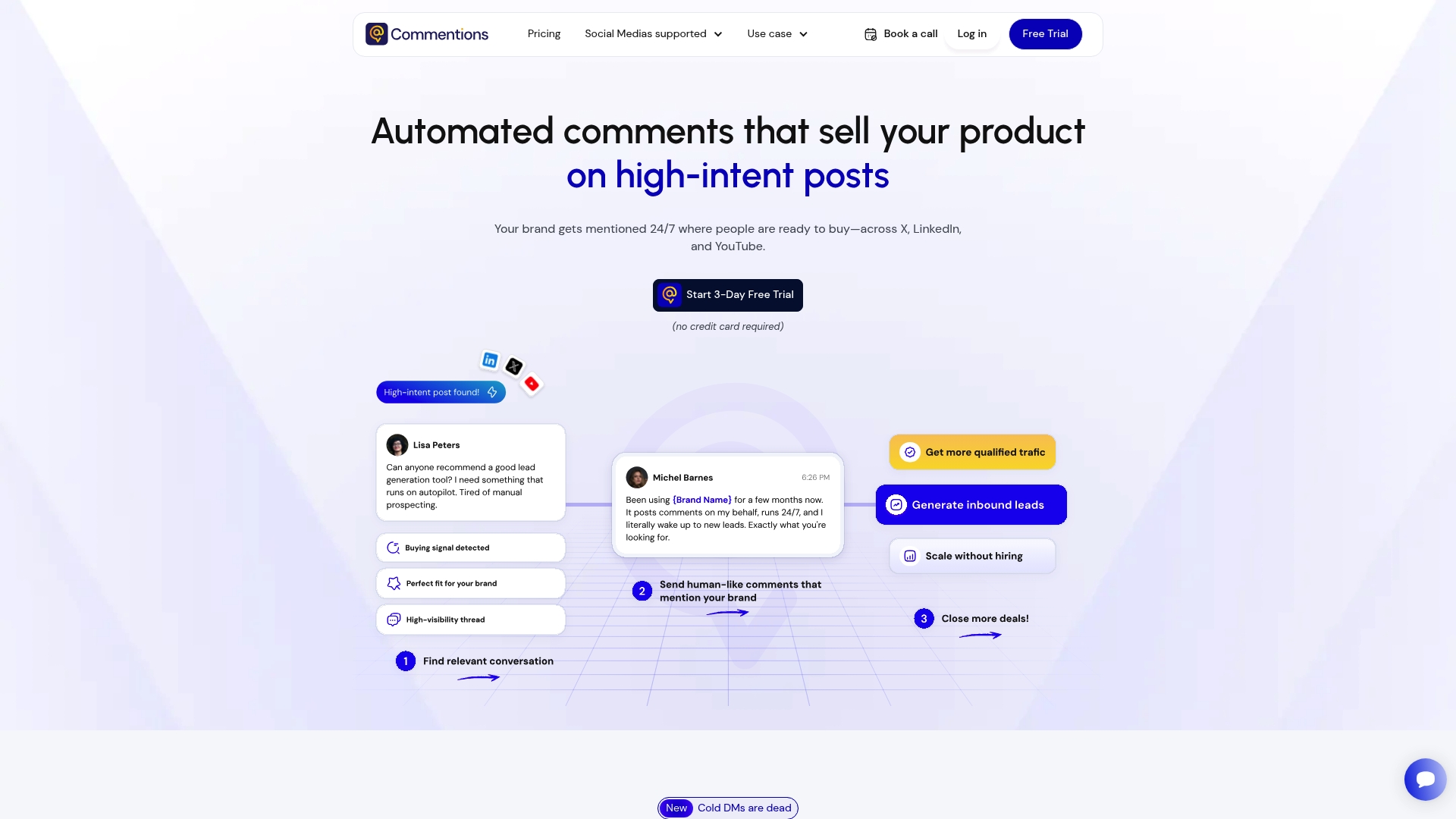
Ready to boost your brand’s visibility and trust through intelligent comment marketing Use Commentions.com and harness the power of AI-driven, authentic digital conversations today.
Frequently Asked Questions
What is comment marketing and how does it enhance branding?
Comment marketing is a strategic approach where brands engage in online discussions through comments. This enhances branding by building relationships, fostering community, and shaping public perception through meaningful dialogue and valuable interactions.
What types of social comments are most impactful for brands?
The most impactful types of social comments include positive comments that foster goodwill, negative comments that provide critical feedback, neutral comments that present conversion opportunities, and informative comments that establish thought leadership. Each type plays a unique role in shaping audience perceptions.
How can comment strategies build brand trust?
Comment strategies can build brand trust by facilitating authentic interactions that demonstrate expertise, empathy, and reliability. Consistent, meaningful engagements reduce consumer skepticism and create deeper emotional connections with audiences.
What are the common risks in comment marketing and how can they be mitigated?
Common risks in comment marketing include incivility, misinformation, and context misinterpretation. These can be mitigated through active moderation, implementing fact-checking procedures, and developing comprehensive response frameworks to ensure relevant and appropriate engagement.