Key Takeaways
SEO and Comment Strategy Fundamentals
When you're building a startup or running a freelance marketing practice, you're essentially competing for attention in spaces already saturated with noise. The reality is simple: organic growth doesn't happen by accident. It requires understanding how search engines work alongside how real people engage in online conversations. These two forces, when aligned, create a compounding effect that drives sustainable traffic without relying on paid advertising budgets you might not have.
SEO forms the structural foundation. Keyword research and on-page optimization are the cornerstones because they determine whether your content even shows up when potential customers search for solutions you offer. But here's where most founders get stuck: they treat SEO as a checklist exercise rather than a strategic alignment. You're not just optimizing for algorithms; you're positioning your brand to answer real questions your audience asks. When you understand what terms your target market actually searches for, you can create content that ranks and resonates simultaneously. This isn't about stuffing keywords into paragraphs. It's about building content architecture that search engines recognize as authoritative while readers find genuinely useful.
Comments represent the human layer of organic growth that SEO alone cannot achieve. While search optimization gets your content discovered, comments create the social proof and engagement that convert visitors into customers. Think about the last time you read an article and scrolled to the comments section. Those conversations influence your perception of the content's value. They reveal real use cases, answer common objections, and demonstrate active community participation. For startup founders, this is critical because trust compounds faster when potential customers see others asking questions and getting thoughtful responses from your team.
The strategic combination works like this: SEO drives visibility and attracts cold traffic through search. Smart commenting on relevant platforms within your industry expands that visibility by placing your expertise directly in front of engaged audiences already discussing problems you solve. When someone posts about a challenge your product addresses, a genuine, contextual comment from your brand provides immediate value and creates a pathway back to your content. This isn't spamming or self-promotion disguised as conversation. It's participating authentically in spaces where your buyers are already present, building visibility across multiple touchpoints.
For freelance marketers managing this across clients, the coordination matters enormously. You need systems that identify high-engagement discussions worth participating in and ensure comments align with each brand's voice and positioning. Automation can handle detection and initial templating, but the human touch must remain consistent. Creating engaging comments naturally requires understanding your brand's specific context, tone, and the actual conversation happening in each space. A tech startup's comment approach differs completely from a B2B service provider's, which differs from a creator's audience engagement strategy.
The metrics matter differently depending on your stage. Early-stage founders track which comments generate click-throughs and which conversations lead to customer conversations. Freelance marketers monitor engagement rates and the quality of discussions their comments spark. Both track organic traffic attribution, ranking improvements for target keywords, and most importantly, the relationship between comment activity on social platforms and downstream conversions. You'll find that consistent, valuable participation on platforms like LinkedIn and X drives qualified traffic because you're reaching people actively thinking about your solution.
Pro tip: Start by mapping where your specific audience actually congregates online and what they're discussing, then align your SEO content pillars with those conversation themes to create natural bridging opportunities between search discovery and social engagement.
Types of Automated Commenting Approaches
Automated commenting isn't one-size-fits-all. Different approaches serve different strategic goals, and understanding the distinction helps you choose what actually aligns with your brand and audience. The wrong approach wastes time and damages credibility. The right one multiplies your visibility without requiring you to manually hunt for conversations 24/7. For startup founders and freelance marketers stretched thin, knowing which approach fits your situation is the difference between sustainable growth and burnout disguised as productivity.
The first approach is context-aware commenting, where natural language processing powers intelligent feedback on written content to ensure relevance. This method analyzes the conversation thread, the original post, and current comments to generate responses that feel like a genuine human reading the material and adding value. Instead of dropping generic praise or self-promotional links, context-aware systems understand the actual discussion happening and position your comment as a logical next thought. For a freelance marketer working across multiple clients, this saves enormous time because you're not writing each comment from scratch. You define brand voice and messaging guidelines, then the system generates contextually appropriate responses that maintain consistency while feeling authentic. A SaaS founder commenting on a discussion about workflow automation challenges will receive comment options that directly address the specific pain points mentioned, not template responses that sound robotic.
The second approach is trigger-based commenting, which monitors specific keywords, hashtags, or discussion types and automatically flags them for your team's attention or generates pre-approved responses. This works exceptionally well when you have clear parameters around when your brand should participate. If you're a project management tool, every mention of "team collaboration struggles" or "deadline tracking" is a potential conversation you want to join. Trigger-based systems catch these opportunities instantly, ensuring you never miss high-engagement posts from your target audience. The automation here isn't about posting without human oversight; it's about notification and routing. Your team gets alerted the moment someone discusses your solution's problem space, then you decide whether to comment and use suggested talking points. This approach scales your responsiveness across platforms without sacrificing the human judgment that makes comments feel authentic.
The third approach combines automated feedback systems with human review cycles, creating a hybrid model where automation handles detection and drafting while humans maintain quality control before posting. This is arguably the most sustainable approach for brands that care about maintaining voice consistency and avoiding the occasional mishap. The system identifies relevant discussions, drafts contextual comments based on your brand guidelines, and queues them for review. Your team approves, edits, or rejects within minutes rather than spending hours manually finding and crafting responses. For startups, this removes the manual grunt work without sacrificing authenticity. For freelance marketers managing multiple client accounts, this creates a workflow that scales to dozens of clients without quadrupling your workload.
The fourth approach is platform-specific automation, where different strategies apply to different networks. LinkedIn commenting operates differently than YouTube or X because audience expectations and conversation rhythms differ. A thoughtful, detailed comment performs better on LinkedIn where professionals expect substance. On X, brevity and personality drive engagement. Platform-specific automation allows you to maintain distinct approaches optimized for each channel's norms. Some brands use detailed, resource-sharing comments on LinkedIn while using quicker, trend-responsive comments on X. This isn't about being inauthentic across platforms; it's about respecting where your audience spends time and how they expect to interact in those spaces.
Each approach works best for different situations. Why automate social comments at all comes down to efficiency and consistency. You're not replacing authentic engagement; you're multiplying your team's capacity to show up consistently in spaces where your buyers congregate. The real risk isn't automation itself; it's choosing an approach misaligned with your brand values or audience expectations. Test, measure, and adjust based on which comments actually drive engagement and conversions rather than vanity metrics like total comments posted.
Here's a quick comparison of the four main automated commenting approaches and their best-use scenarios:
Pro tip: Start with trigger-based automation on one platform to catch high-intent conversations, then layer in context-aware commenting only after you've proven the triggers consistently surface relevant opportunities worth your team's engagement.
How AI-Powered Platforms Enhance Engagement
AI-powered platforms fundamentally change what's possible when you're managing organic growth across multiple channels. Without AI, you're limited by time and human bandwidth. You can only be in so many conversations simultaneously, and manually crafting personalized responses to thousands of potential customers simply doesn't scale. AI removes this bottleneck by handling detection, analysis, and initial response generation, freeing your team to focus on high-value interactions and strategy. For startup founders juggling product development alongside marketing, this is transformative. For freelance marketers managing dozens of client accounts, it's the difference between sustainable work and burnout.
The core mechanism is personalization at scale. Personalized learning experiences increase engagement by adapting to individual needs, and the same principle applies to social engagement. AI systems analyze each user's posting history, engagement patterns, and stated interests to understand what resonates with them. When your brand comments on their post, the AI ensures the response feels personally relevant rather than templated. Someone who posts about technical challenges gets a comment addressing technical specifics. Someone focused on business strategy gets commentary tied to growth and ROI. This micro-personalization dramatically improves response rates because people recognize genuine engagement versus automated spam. The math is straightforward: personalized comments receive 3 to 5 times higher engagement than generic responses because they demonstrate you actually read the post rather than just scanning keywords.

The second enhancement is real-time conversation analysis. AI technologies provide personalized feedback and automate routine processes to streamline operations and foster deeper involvement. In the context of social engagement, this means AI monitors ongoing conversations to identify the optimal moment for your comment. Timing matters enormously. A comment posted when discussion is active gets seen and engaged with. A comment posted after the conversation has moved on gets buried. AI tracks comment velocity, identifies peak engagement windows, and queues your response for maximum visibility. It also analyzes the conversation's emotional tone and complexity level, adjusting your comment's depth and tone accordingly. A casual question gets a brief, friendly response. A deeply technical discussion gets a substantive, resource-rich comment.
Another critical enhancement is consistency with scale. Managing multiple client accounts or running campaigns across different audience segments requires maintaining distinct brand voices simultaneously. AI platforms let you define voice guidelines, messaging pillars, and brand-specific tone for each account. The system then generates comments that feel unique to each brand while maintaining quality standards across all accounts. A B2B software company's comments sound different from a lifestyle creator's comments, even though both are managed through the same platform. This prevents the dilution of brand identity that typically happens when automation enters the picture. Your audience still experiences your brand's authentic voice because AI is working within guardrails you've established, not replacing human judgment about what your brand stands for.

Understanding the role of AI in social media transformation reveals how these systems address a fundamental challenge: the gap between where your audience is and where you can realistically show up as a small team. AI collapses that gap. It identifies high-value conversations automatically, generates contextually appropriate responses, schedules posts for optimal timing, and tracks which interactions drive actual business results. The platform learns continuously, adjusting comment styles and timing based on which approaches actually convert visitors into leads and customers. This feedback loop means your engagement strategy improves over time without requiring you to manually test and iterate.
The real power emerges when you combine detection, personalization, analysis, and optimization into a coordinated system. AI spots the opportunity, understands the context, generates a relevant response, times the posting for visibility, and measures the outcome. Your team reviews high-stakes comments for brand safety, approves comment queues before posting, and focuses on converting engaged users into customers. This division of labor between AI and humans creates efficiency without sacrificing authenticity or brand control.
Pro tip: Start by letting AI handle the detection and initial comment drafting for one month, then analyze which comments generated the highest engagement rates to identify which voice styles and topic approaches actually resonate with your specific audience.
Balancing Authenticity and Ethical Concerns
Automation raises legitimate questions. When you use AI to generate and post comments automatically, you're treading into territory where transparency and authenticity become non-negotiable. The line between efficiency and deception is real, and crossing it damages your brand permanently. Audiences today are skeptical of automation. They've seen bot comments. They've experienced the hollow feeling of engaging with a brand that feels robotic and transactional. Your competitive advantage isn't just in volume; it's in feeling genuine. The good news is that ethical automation and effective automation are aligned, not opposed. Brands that operate transparently build trust faster and convert better than those that hide behind algorithmic curtains.
Authenticity starts with transparency about your process. Balancing technological innovation with ethical standards requires transparency and self-regulation to maintain credibility. When you use AI-powered commenting platforms, your team should understand the system's capabilities and limitations. More importantly, your audience should understand that you're using automation without feeling deceived by it. This doesn't mean adding disclaimers to every comment saying "This comment was partially AI-generated." That would be cumbersome and counterproductive. Instead, it means ensuring your comments represent your actual brand perspective, answer real questions genuinely, and contribute value to conversations rather than manipulating engagement metrics. A comment that provides genuinely useful information or insight is authentic regardless of whether AI helped draft it. A comment designed purely to game algorithms or manufacture social proof is inauthentic whether it's human-written or AI-generated.
The practical distinction comes down to intent. Ethical AI ethics frameworks prioritize transparency, fairness, and user trust as foundations for sustainable practices that build genuine engagement. When you use AI commenting to participate in conversations where your expertise adds value, you're operating ethically. When you use it to flood comment sections with generic praise or hidden affiliate links, you're operating unethically. The automation tool itself is neutral. Your use of it determines whether it's ethical. Consider these guardrails: First, only comment on posts and in conversations genuinely relevant to your audience's needs. Second, ensure your comments answer questions or add information rather than promoting your product. Third, respond to follow-up comments personally when possible, showing that your participation extends beyond automated comment posting. Fourth, review your comment quality regularly. If engagement is high but conversion is low, your comments might feel spam-like even if they're technically relevant. Fifth, disclose your use of automation if directly asked. Transparency builds trust more effectively than discovery of hidden processes.
For startup founders, ethical automation actually improves long-term results. Early-stage companies live or die by reputation. A founder known for participating authentically in community conversations builds credibility that lasts years. A founder known for spammy automation loses community trust permanently. The short-term gains from quantity over quality always reverse. For freelance marketers, ethics protect your reputation and your clients' reputations simultaneously. A client discovers later that you were using unethical automation approaches? That relationship ends badly. Your ability to manage multiple client relationships depends on maintaining standards across all of them. One ethical slip damages your entire book of business.
The implementation challenge is maintaining quality at scale. You need systems that catch potentially problematic comments before they post. This means setting parameters that prevent your AI from commenting on polarizing topics where brands shouldn't participate, limiting frequency to avoid appearing spammy, and requiring human review on high-visibility posts. It means building workflows where AI handles the volume but humans maintain the gatekeeping. A startup with ten team members managing fifty accounts benefits from automation that surfaces opportunities and drafts responses. But those responses should go through human review before posting. The time savings come from not hunting for opportunities and writing from scratch, not from eliminating human judgment about brand appropriateness.
Your brand also builds authenticity through consistency. When people follow your commenting patterns over weeks, they should recognize a genuine perspective emerging. You engage regularly with certain types of content. You provide specific kinds of value. You ask follow-up questions. You build relationships with frequent commenters in your space. This consistency signals authenticity because algorithms can mimic single comments but struggle to maintain coherent persona over time. AI commenting platforms should amplify your genuine brand voice, not create a fake persona that crumbles under scrutiny.
Pro tip: Establish a personal review process where you personally approve the first 50 comments your AI generates in a new account before enabling broader automation, using this sample to ensure the system captures your actual brand voice and values accurately.
Common Pitfalls and Legal Compliance
Legal issues in SEO and automated commenting aren't hypothetical risks. They're real consequences that can shut down campaigns, damage your reputation, and create financial liability. The landscape has shifted dramatically over the past five years. Regulators now actively monitor digital marketing practices. Platforms enforce their terms of service aggressively. Users sue brands over privacy violations. For startup founders and freelance marketers, understanding these risks isn't optional anymore. It's foundational to operating sustainably. The good news is that compliance and effective marketing align. Brands that respect privacy and operate transparently build stronger customer relationships and rank better in search engines.
The most common pitfall is underestimating privacy regulation. Privacy laws like GDPR and CCPA compliance is mandatory for collecting and processing user data, yet many founders operating in North America assume these regulations don't apply to them. Wrong. If you collect data from European users or California residents, these laws apply to your business regardless of where you operate. GDPR violations carry fines up to 4 percent of global revenue or 20 million euros, whichever is higher. CCPA violations reach $7,500 per violation. A single campaign collecting email addresses without proper consent could expose you to massive liability. When you use AI commenting platforms, this becomes even more critical. Your platform is collecting data about which posts you interact with, which users you target, and potentially personal information about those users. Your terms of service with that platform should clearly specify how your data is handled, where it's stored, and whether it's shared with third parties.
The second major pitfall is violating platform terms of service. LinkedIn, X, YouTube, and Facebook all prohibit certain types of automated engagement. Some platforms prohibit automation entirely. Others allow it under specific conditions. Many platforms have caught on to sophisticated automation and disable accounts without warning. When you use an AI commenting platform, verify that the platform complies with the specific terms of service of each network you're using. A platform claiming to be universally compatible with all social networks should raise red flags. Each network has different requirements. Violating these terms doesn't just result in account suspension. It can result in your entire brand being blacklisted from the platform. For a startup built on social engagement, that's catastrophic. For a freelance marketer managing client accounts, that's a career-ending mistake if you lose a major client's account to platform violation.
The third pitfall is deceptive marketing practices. SEO pitfalls include non-compliance with regulations, deceptive marketing, and black-hat tactics that violate FTC guidelines and consumer protection laws. This applies directly to commenting. When you post comments that hide promotional intent or mislead users about your brand's relationship to the topic, you're operating deceptively. The FTC requires disclosure of material connections. If you're promoting your product in a comment, users should understand that you're biased. If you're using comments to drive traffic to affiliate links without clear disclosure, you're violating FTC regulations. These violations carry fines starting at $43,792 per violation. Even one misleading comment multiplied across platforms creates significant exposure.
Implementation-wise, this means establishing clear policies before you start commenting. First, audit your AI commenting platform's compliance documentation. If they can't produce clear evidence of GDPR, CCPA, and FTC compliance, find another platform. Second, establish comment guidelines for your team that explicitly prohibit misleading statements, undisclosed promotions, and deceptive practices. Third, implement a review process that catches compliance issues before posting. This doesn't require a lawyer reviewing every comment, but it does require trained team members spotting red flags. Fourth, maintain records of your compliance processes. When issues arise, demonstrating good-faith compliance efforts reduces penalties significantly. Fifth, review your data collection and storage practices. If you're collecting commenter data to build marketing lists, ensure you have proper consent and are following privacy law requirements.
For freelance marketers managing multiple clients, compliance becomes exponentially more complex. You're responsible for each client's compliance, not just your own. A client asks you to use automation on their LinkedIn account, but their audience includes European users? You need to ensure that automation complies with GDPR. A client wants you to generate comments promoting their affiliate products without disclosure? You need to refuse and explain the FTC violation. Your reputation rests on maintaining standards across every single client relationship. One compliance failure damages your entire client base's trust in your judgment.
The practical path forward involves starting conservatively and expanding only after you understand each platform's specific requirements. Document everything. When you establish your commenting strategy, create a policy document. When you choose a platform, save their compliance certifications. When you set guidelines for your team, record them. When questions arise, err on the side of caution. A delayed comment is better than a legal violation.
To help navigate compliance, here's a summary of the most critical legal risks and how to address them:
Pro tip: Before launching any automated commenting campaign, run it past two questions: "Can I explain this comment to a regulator and feel confident it's compliant?" and "Would I feel comfortable if this comment appeared in a lawsuit against my company?" If you hesitate on either, redesign the approach.
Unlock Sustainable Organic Growth with AI-Powered Commenting
The article highlights a key challenge many startup founders and freelance marketers face: aligning SEO fundamentals with authentic, human-like engagement to fuel lasting organic growth. You have the right content optimized for search but lack the time and resources to participate consistently in conversations that convert cold traffic into loyal customers. The pain points are clear - spotting high-engagement, relevant discussions and responding with contextually valuable comments that reflect your brand voice without sacrificing authenticity or overwhelming your team.
This is where Commentions.com transforms your marketing strategy. Our AI-powered platform detects those crucial social conversations on X, LinkedIn, and YouTube and crafts natural, on-brand comments designed to amplify your visibility and generate leads around the clock. By defining your brand context and tone, you ensure every comment feels genuine and aligned with your SEO and comment strategy goals discussed in the article. Discover how to multiply your engagement efficiently without losing control of your brand’s authenticity by exploring how Commentions helps brands grow organically.
Ready to drive consistent, targeted traffic and build meaningful relationships at scale.
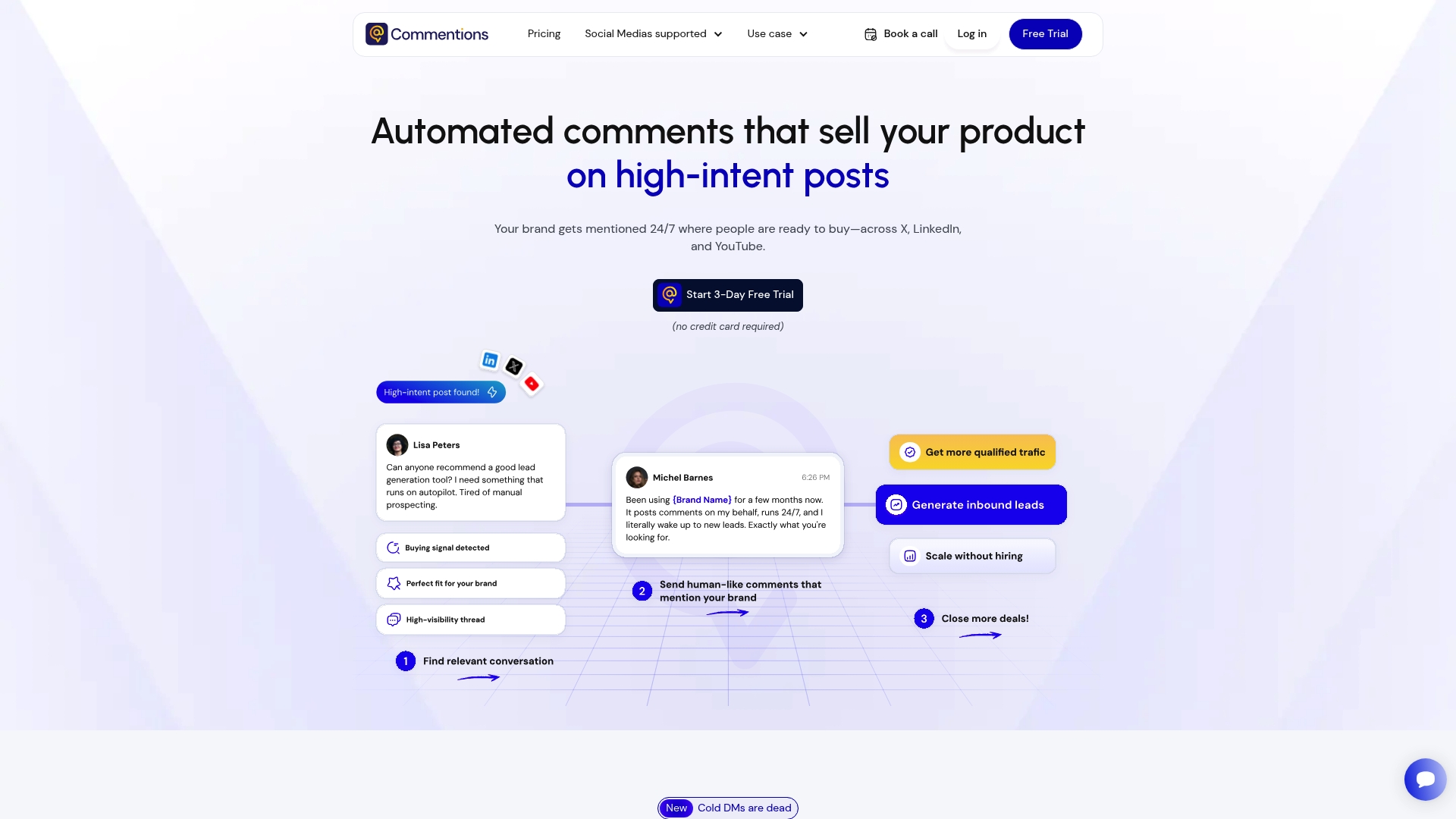
Start maximizing your organic growth today with Commentions.com. Automate smart commenting backed by SEO insights to increase your brand presence and convert conversations into customers. Visit our site to learn more and get started now.
Frequently Asked Questions
What are the key components of an effective SEO strategy?
An effective SEO strategy includes keyword research, on-page optimization, and creating high-quality content that answers users' questions while aligning with search engine algorithms.
How can comments enhance organic growth in SEO?
Comments add a human layer to organic growth by fostering engagement and social proof, helping convert visitors into customers through genuine interactions.
What types of automated commenting approaches can be used?
Automated commenting approaches include context-aware commenting, trigger-based commenting, hybrid models combining AI with human review, and platform-specific strategies tailored to each social media network.
How do AI-powered platforms improve engagement in commenting strategies?
AI-powered platforms enhance engagement by personalizing comments at scale, analyzing conversations for optimal timing, and ensuring consistency across multiple accounts, all while freeing up human resources for strategic tasks.