Key Takeaways
Defining Automation Tools in Marketing Today
Marketing automation software handles tasks that marketers previously executed manually. These tools replace repetitive workflows with intelligent systems that work around the clock. The result is faster campaign execution, better lead nurturing, and more consistent brand messaging across channels.
At its core, marketing automation encompasses segmentation, lead generation, and campaign tracking. Think of it as hiring a tireless assistant who never sleeps. This assistant organizes your audience into segments, identifies prospects ready to buy, and tracks every interaction they have with your brand.
Modern automation tools do far more than scheduling posts. They handle customer service through AI bots, personalize communication based on user behavior, and optimize resource allocation. For founders and freelancers, this means you can focus on strategy while automation handles execution. You're not replacing your judgment; you're amplifying your reach.
Why does this matter for organic growth? Because marketing automation improves efficiency and effectiveness by reducing manual touchpoints while increasing touchpoint frequency. You engage more people with less effort. More importantly, you engage them at the right moment in their customer journey, not just whenever you remember to post.
The specifics vary by platform and tool. Some focus on email workflows. Others specialize in social media engagement. The most effective solution combines multiple functions into one cohesive system. When you can detect high-engagement conversations happening in real-time and insert your brand into those conversations with contextual relevance, you're not just automating. You're optimizing for genuine connection.

This distinction matters. Automation that feels robotic alienates audiences. Automation that feels human strengthens relationships. The tools that succeed today are those that maintain authenticity while scaling effort.
Pro tip: Start by automating your most repetitive task first, whether that's scheduling or comment monitoring, rather than trying to automate everything at once. This builds momentum and teaches you what actually works for your specific audience.
Types of Automation Tools for Social Platforms
Automation tools for social media come in different flavors, each designed to solve specific problems. Some handle publishing schedules. Others manage inbox conversations. Some track performance metrics. The best strategy combines multiple tool types into a unified workflow that matches your specific platform mix and audience behavior.
Publishing and scheduling tools form the foundation of most automation strategies. These platforms let you batch-create content and distribute it across channels on a predetermined timeline. Instead of logging in multiple times daily, you write once and let the tool handle distribution. This matters because consistency drives algorithm performance on most social networks.
Engagement automation goes deeper. These tools monitor conversations, detect high-performing content, and help you join relevant discussions. They identify when audiences are most active and responsive. For founders building organic reach, this unlocks the ability to participate in conversations happening around the clock without actually staying awake around the clock. You can also use inbox management features to organize direct messages and prioritize urgent inquiries.
Analytics and reporting automation transforms raw data into actionable insights. Rather than manually compiling metrics from five different platforms, these tools aggregate everything. You see what content resonates, which audiences engage most, and which platforms drive actual business results. This visibility lets you optimize faster.

Workflow automation ties everything together. These systems create conditional logic that triggers actions based on specific events. When a user comments on a post, the tool can automatically respond. When engagement hits a threshold, it can notify you. When a prospect takes a particular action, it can segment them for targeted follow up.
The key is choosing tools aligned with your actual workflow, not the fanciest option available. A tool with 50 features you'll never use creates friction, not efficiency. Start with one clear problem you want solved, find the tool that solves it best, then expand from there.
Here's a summary of common types of marketing automation tools and their main business impacts:
Pro tip: Match your tool selection to your primary platform first, then add complementary tools for secondary channels rather than trying to manage everything through one generalist platform that compromises on each platform's specific strengths.
How Automation Drives Organic Engagement
Organic engagement happens when your audience genuinely wants to interact with your content. Automation does not kill authenticity. When done correctly, it actually amplifies it by giving you back time and mental bandwidth to focus on what matters. You stop being a posting robot and start being a strategic communicator.
The mechanics are straightforward. Automation handles repetitive detection and distribution tasks so you can invest energy in meaningful responses. When someone comments on your post at 3 AM, an automated system can flag it immediately rather than letting it disappear into the feed. You then jump in with a genuine, thoughtful reply during business hours. The audience sees engagement happening naturally across time zones.
This timing advantage matters enormously. Automation reduces manual tasks while enabling personalized communication at scale. You identify high-value conversations faster. You respond to opportunities before they fade. You maintain presence without maintaining constant vigilance.
The second mechanism involves relevance matching. Automation tools can identify conversations aligned with your expertise and brand positioning. Instead of responding to every comment generically, you inject yourself into discussions where you can add genuine value. Your audience recognizes this selectivity. Comments from brands that actually understand context feel different from spam.
Consistency also builds engagement. When your audience knows you respond thoughtfully to comments, they engage more readily with future posts. Automated feedback systems boost engagement through timely, individualized support that adapts to user behavior. You are not replacing human judgment. You are augmenting human capacity with systematic support.
The trap is automating away the human element entirely. Generic template responses damage relationships. Automated engagement that ignores context alienates audiences. The winning approach combines automation for detection and distribution with human judgment for actual communication.
Pro tip: Set up automation to flag high-engagement conversations and notify you in real-time, then manually craft responses rather than automating responses themselves, this preserves authenticity while gaining speed.
Legal and Ethical Standards in Social Automation
Automation tools operate within a complex web of regulations, platform policies, and ethical expectations. Ignoring these frameworks creates legal exposure and damages audience trust. Understanding what you can and cannot automate protects your brand and ensures your growth strategy survives platform algorithm changes.
Data privacy forms the foundation. When automation tools collect user data to identify engagement opportunities or segment audiences, that data collection must comply with regulations like GDPR, CCPA, and industry-specific rules. Your automation cannot harvest personal information without consent. It cannot store data longer than necessary. It cannot sell or share data without explicit permission. These are not optional guidelines. They are legal requirements with real penalties.
Ethical frameworks guiding automation require transparency, fairness, and data protection compliance. You must disclose when content is algorithmically enhanced or when responses come from automated systems. Your audience deserves to know they are interacting with a bot or an automated process, not a human.
Bias and discrimination represent another critical area. Automation tools can inadvertently discriminate if trained on biased data or designed with flawed logic. Your automated engagement system should not target or exclude audiences based on protected characteristics. This means auditing your automation rules regularly to ensure they do not perpetuate unfair treatment.
Platform-specific rules add another layer. LinkedIn prohibits certain forms of automation. Facebook has restrictions on bot behavior. X has guidelines about automated interactions. Violating these policies can result in account suspension or permanent bans. Review each platform's terms of service before deploying automation.
Transparency and accountability in AI systems require multi-stakeholder collaboration across technical, legal, and organizational teams. Do not deploy automation and hope for the best. Test it. Monitor it. Document your compliance efforts. Build audit trails showing how decisions get made.
The following table compares key legal and ethical considerations for social automation across major areas:
Pro tip: Audit your automation settings quarterly against current platform policies and data protection regulations in your target markets, documenting all compliance steps to protect yourself if regulators or platforms ever question your practices.
Mistakes to Avoid With Automated Comments
Automated comments can backfire spectacularly when done wrong. Your brand reputation lives or dies based on how your automation behaves when you are not watching. The mistakes that wreck automation strategies fall into clear patterns, and most are entirely preventable.
The first mistake is deploying without testing. You cannot assume your automation will work correctly just because the tool looks polished. Test your comment templates against real posts in your niche. See how they perform. Get feedback from colleagues. Watch for awkward phrasing, irrelevant suggestions, or tone mismatches. If a test comment makes you cringe, your real audience will too.
Generic templated responses destroy credibility faster than silence ever could. When you automate "Great post, thanks for sharing," on hundreds of comments, your audience recognizes the pattern immediately. They see your brand as lazy or spammy, not thoughtful. Automated comments must be contextually sensitive and tailored rather than generic. Invest in creating variations that respond to specific themes or content types, not one-size-fits-all templates.
Another critical error is ignoring factual accuracy. If your automation generates comments with incorrect information, wrong claims, or outdated references, you damage trust permanently. Human oversight remains essential to verify accuracy and prevent AI-generated errors in automated communications. Review what your automation is saying before it goes live to audiences.
Over-automation creates another hazard. Using automation for every single comment makes your brand feel robotic and disconnected. Your most valuable interactions should involve genuine human judgment. Save automation for high-volume scenarios where speed matters more than nuance, not for every single engagement opportunity.
Finally, failing to adapt creates stagnation. Automation rules that worked last quarter might feel dated now. Monitor performance metrics. Listen to audience feedback. Update your automation templates as culture shifts. Static automation becomes tone-deaf automation.
Pro tip: Manually review and respond to a sample of your automated comments weekly, checking for contextual relevance and accuracy, then adjust your automation settings based on what you learn.
Unlock Authentic Organic Growth with AI-Powered Comment Automation
The article highlights the challenges founders and creators face when trying to maintain authentic engagement at scale while avoiding robotic or generic interactions. The key pain points are balancing efficient automation with human-like personalization and responding promptly to high-value conversations without sacrificing brand voice or compliance. Terms like high-engagement detection and contextual relevance echo the need for automation tools that do more than just schedule posts—they must foster genuine connections that boost organic reach and lead generation.
Commentions.com perfectly addresses these challenges by providing an AI-driven platform that automatically posts relevant, human-like comments on social platforms including X, LinkedIn, and YouTube. This means your brand stays visible around the clock by inserting authentic mentions in conversations that matter most. You can define your unique tone and workflows to ensure every comment feels natural and aligned with your marketing goals.
Harness the power of automation that amplifies authenticity without losing your human touch. See how intelligent comment automation can drive targeted traffic, increase visibility, and generate leads effortlessly.
Discover a smarter way to engage organically with your audience now
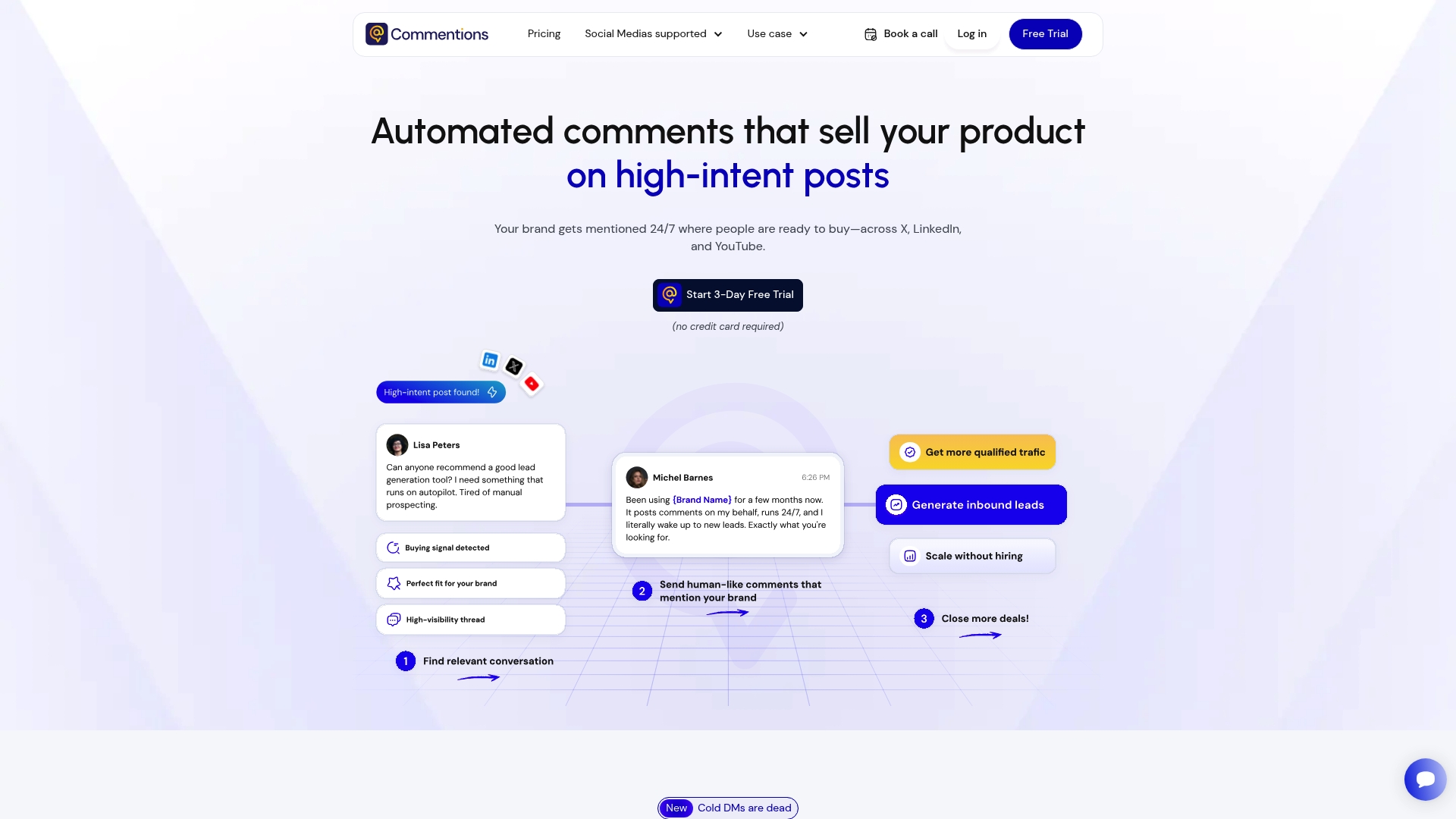
Ready to transform your organic social growth with proactive, compliant, and context-aware automation? Get started today with Commentions.com and watch your brand conversations thrive. Learn more about how our platform harnesses automation for genuine connections by visiting our landing page. Take control of your social engagement and amplify results with AI-powered marketing automation.
Frequently Asked Questions
What are marketing automation tools?
Marketing automation tools are software solutions that handle repetitive marketing tasks, such as segmenting audiences, tracking campaigns, and managing customer interactions, allowing marketers to focus on strategy and higher-level tasks.
How can automation improve organic social growth?
Automation improves organic social growth by increasing efficiency, enabling timely engagement with audiences, and allowing for personalized communication, which strengthens relationships and boosts engagement without constant manual effort.
What types of automation tools are available for social media?
There are several types of automation tools for social media, including publishing and scheduling tools, engagement automation tools, analytics and reporting tools, and workflow automation systems. Each type serves specific functions to enhance marketing strategies and audience interaction.
What mistakes should be avoided when using automated comments?
Common mistakes to avoid when using automated comments include deploying without testing, using generic templated responses, ignoring factual accuracy, over-automation, and failing to adapt to changes in audience behavior or cultural context.
Recommended
- Commentions - How to Automate Social Presence for Targeted Brand Growth
- Commentions - Organic Social Media Growth: Achieve Real Brand Visibility
- Commentions - Why Automate Social Comments for Brands’ Growth
- Commentions - What Is Comment Automation: Unlocking Engagement
- Conversion Rate Optimization 101: Transform Visitors into Customers