Quick Summary
1. Define a Clear Brand Message to Stand Out
Your brand message is the core statement that tells people exactly who you are, what you do, and why it matters. For founders building visibility in crowded tech spaces, this clarity becomes your competitive edge. Without a defined message, you blend into the background. With one, you become memorable. The difference between these two positions determines whether potential customers, investors, and collaborators notice you or scroll past.
Think of your brand message as the answer to three fundamental questions: What expertise do you bring? What values drive your decisions? Who specifically benefits from what you offer? Defining your purpose and values clearly aligns your personal brand and allows you to connect on a human level with your audience rather than competing solely on credentials or service features. A purpose-driven approach differentiates you by focusing on individual character and authenticity instead of generic positioning. When you're transparent about what you stand for, you naturally attract people who resonate with that vision. This isn't about crafting the perfect tagline. It's about distilling your professional identity into a crystal-clear statement that you can use consistently across your website, social profiles, video introductions, and conversations. Your message should be specific enough to mean something but broad enough to encompass your work. Instead of saying "I help companies with marketing," you might say "I help early-stage SaaS founders build authentic audiences through genuine engagement rather than paid campaigns." Notice how the second version reveals your values, your target audience, and your methodology all at once.
Consistency with your message is what builds trust. Every post you make, every comment you contribute, every article you publish should reflect this core message. Founders who maintain this consistency see their personal brand compound over time. People begin associating you with specific expertise and values. When they need someone in your domain, you're the name that surfaces in their mind. One practical way to test your message is to share it with three trusted peers and ask if they can immediately picture who you serve and why you're different. If they hesitate or ask clarifying questions, refine it further. Your message should require zero explanation.
Pro tip: Write your brand message in one clear sentence, then practice saying it aloud until it sounds conversational rather than scripted. When you can deliver it naturally in real conversations, you've nailed it.
2. Share Your Expertise Through Value Posts
Value posts are the currency of personal branding in the digital age. They showcase what you know, demonstrate your thinking process, and give your audience a reason to follow you. For founders, this means moving beyond self-promotional updates to actually teaching, explaining, and solving problems that your target market faces every day. When you consistently share knowledge instead of just announcements, you shift from being someone trying to sell something to being someone worth listening to.
The power of this approach lies in how it builds trust at scale. Sharing knowledge through posts establishes thought leadership and fosters genuine credibility within your field. Rather than claiming you're an expert, you prove it by sharing insights that actually help people. When someone reads a post where you break down a complex problem, offer a framework they can use, or share a lesson learned from your own failures, they experience your expertise firsthand. This is infinitely more powerful than any credential listed on your profile. You're not asking them to trust you. You're showing them why they should. The best value posts come from the unique intersection of your experience and your audience's needs. What problems do you solve repeatedly for clients? What questions do people ask you constantly? What mistakes did you make early in your career that others are probably making now? These become the kernels of your content strategy.
Practically speaking, value posts don't require perfection or polished production. A founder sharing a quick insight about what killed a product feature that seemed brilliant at first, or explaining how to evaluate whether a new technology actually fits your startup's needs, resonates far more than a generic motivational post. The specificity is what matters. Create posts that answer real questions, provide useful frameworks, or reveal something about how you actually think through problems. Mix different formats too. Sometimes write longer posts that go deep. Other times share quick tips or lessons in a few sentences. The consistency of showing up with something useful is what compounds over time. Your audience begins recognizing you as someone who genuinely contributes to conversations rather than just extracts value from them.
Pro tip: Save three to five common questions or challenges your ideal customers mention, then dedicate one post weekly to addressing one thoroughly. This ensures your content stays relevant and actionable rather than drifting into generic territory.
3. Leverage Storytelling to Build Authenticity
People remember stories far better than they remember facts. When you share a genuine story about your entrepreneurial journey, your failures, or the problem that drove you to start your company, you create an emotional connection that credentials alone can never achieve. Storytelling transforms you from a distant figure into a real person with real challenges and real wins. This human dimension is what separates founders who build loyal followings from those who simply accumulate connections.
Sharing memorable stories illustrates purpose and differentiates your brand far more effectively than any mission statement could. When you describe the moment you realized your original product direction was wrong, or how a conversation with a customer changed your entire perspective, you give people insight into how you actually think and operate. Authentic storytelling humanizes your brand and makes your message resonate on a deeper level. The story doesn't have to be dramatic or triumphant either. Some of the most powerful stories are about small realizations, incremental improvements, or lessons learned from mistakes. A story about how you spent three months building the wrong feature teaches people about your process far better than telling them you're customer focused. The specificity and vulnerability in your narrative make it believable and relatable. When founders share these kinds of stories, they build trust because audiences recognize genuine experience rather than polished marketing.
Implementing storytelling means identifying the narratives that define your journey. What moment made you commit fully to solving this problem? What did you learn that surprised you? What would you tell your younger self starting out? These become the stories you weave into posts, video introductions, podcast appearances, and conversations. You don't need dozens of stories. Three to five core narratives that you know well and can share authentically create a foundation that people recognize and remember. Each time you tell one of these stories, you reinforce your brand identity and the values it represents. The alignment between your personal identity and your professional brand becomes unmistakable, which builds the distinctiveness that separates you in crowded markets.
Pro tip: Write down one story from your entrepreneurial journey that involves a failure or unexpected learning. Practice telling it in a natural voice, focusing on the specific details and what you learned rather than the outcome. This becomes your signature story that you can adapt for different contexts.
4. Network by Engaging with Industry Leaders
Networking isn't about collecting contacts. It's about building meaningful relationships with people who shape conversations in your industry. When you actively engage with industry leaders through thoughtful comments, replies, and genuine interest in their work, you position yourself as someone worth knowing. This kind of strategic engagement expands your visibility far beyond what you could achieve through self promotion alone. Industry leaders have audiences, influence, and credibility that you can borrow through association when you engage authentically.
Engaging with industry leaders creates valuable connections and enhances your perceived expertise while keeping you informed about trends that matter in your space. The process works in multiple directions. When you meaningfully comment on a respected founder's post, you're visible to their entire network. When they notice the quality of your contributions, they may engage back, which introduces you to their connections. More importantly, this repeated exposure establishes you as someone genuinely invested in the conversation rather than someone trying to extract value. The difference between effective networking and ineffective networking comes down to intent. Are you engaging because you're interested in the ideas being discussed, or are you just trying to get noticed? People can sense the difference immediately. Authentic engagement means reading what someone posted, forming a genuine thought about it, and contributing something meaningful. Maybe you're adding a perspective they didn't consider. Maybe you're sharing how their insight applies to your specific situation. Maybe you're asking a thoughtful question that shows you understood the nuance of their point.
Practically, this means identifying 5 to 10 industry leaders whose work genuinely interests you. Follow them on the platforms where they're most active. When they post something relevant to your work or interests, engage genuinely. Don't just like and move on. Write a comment that shows you thought about what they said. Ask questions. Share how their ideas connect to problems you're solving. Over time, these consistent interactions build familiarity. Some of these leaders will start recognizing your name and engaging with your content in return. This reciprocal engagement creates a network effect that amplifies your visibility exponentially. You're not trying to become friends with everyone. You're building a community of people who respect your perspective and recognize your expertise.
Pro tip: Choose one industry leader you genuinely admire and commit to meaningfully engaging with their content for two weeks. Quality over quantity matters far more than trying to engage with dozens of people superficially.
5. Showcase Success and Client Testimonials
Nothing builds credibility faster than proof. When potential clients or collaborators see that real people have benefited from working with you, they move from skepticism to trust almost instantly. Showcasing your successes and client testimonials transforms your personal brand from claims into evidence. A founder saying "I help startups scale their user base" is interesting. A client testimonial saying "Working with this founder increased our monthly active users by 340% in six months" is compelling. The second version provides social proof that reassures prospects you can actually deliver results.
Testimonials add authenticity and social proof that reinforce your brand message and help differentiate you in competitive spaces. When you systematically gather and display feedback from satisfied clients, you're building a reputation that precedes you. Prospects see not just your claims but validated evidence that you've helped others succeed. This matters because people trust peer recommendations far more than marketing claims. The psychology is simple but powerful. If a stranger tells you they had a great experience working with someone, you're more likely to believe it than if that person tells you they're great. Testimonials flip this dynamic in your favor by having others do the recommending for you. You're essentially letting your happy clients market you while you focus on delivering exceptional results.
Implementing this strategy means being intentional about collecting success stories. After completing a significant project or achieving results with a client, ask for feedback. Make it easy by suggesting what they might comment on. Instead of vague "Tell us what you think," try "How has this solution impacted your ability to acquire customers?" or "What surprised you most about working with us?" Then feature these testimonials prominently on your website, LinkedIn profile, and in proposals to new clients. Include specifics whenever possible. "Great service" is generic. "Reduced our customer acquisition cost from $85 to $42 while improving retention metrics by 23%" is specific and powerful. Video testimonials are even better if you can get them. Seeing a real person speak authentically about results carries more weight than text. The key is authenticity. Don't pressure clients for overly glowing reviews or try to script their feedback. The most persuasive testimonials sound genuine because they are.
Pro tip: After every successful client engagement, send a follow-up asking for a specific testimonial about the results they achieved, not just general praise about working with you. Results-focused testimonials convert far better than personality-focused ones.
6. Maintain Consistency Across All Platforms
Consistency is the glue that holds your personal brand together. When someone encounters you on LinkedIn, then finds your website, then reads your Twitter posts, they should feel like they're interacting with the same person. Your values remain the same. Your tone feels familiar. Your visual identity is recognizable. This consistency builds recognition and trust in ways that sporadic or contradictory messaging never can. A founder who presents one version of themselves on LinkedIn and a completely different version on Twitter confuses their audience about who they actually are.
Maintaining consistency in messaging and values across channels solidifies brand positioning and builds lasting credibility with your audience. When your brand values, communication style, and visual identity remain uniform across all platforms, people begin to internalize and recognize you. They know what to expect from you. They can predict how you'll respond to situations because your behavior aligns with your stated values. This predictability isn't boring. It's reassuring. Over time, this consistency compounds into strong brand recognition. People start associating specific ideas or approaches with you because you reliably reinforce the same messages. The practical impact is significant too. When your messaging is scattered and inconsistent, people doubt whether you actually stand for what you claim. When your actions and communications align with your stated values across every platform, skepticism melts away and people start believing you're genuinely committed to what you say you care about.
Implementing consistency requires creating a brand reference guide for yourself. Document your core values, the key messages you want associated with your brand, your typical tone and communication style, and your visual identity elements. Then audit your presence across platforms. Do your LinkedIn bio and website bio say roughly the same thing? Is your tone consistent across Twitter, LinkedIn, and your blog? Do your visual elements feel cohesive? Small inconsistencies aren't problems, but major contradictions undermine trust. If you claim to value transparency but your communications are vague and evasive, that's a red flag. If you present as a thought leader on one platform but share contradictory views elsewhere, people notice. The key is alignment between what you say you stand for and how you actually behave across every touchpoint. This doesn't mean being robotic or inauthentic. It means being reliably yourself. Your sense of humor might come through differently on Twitter than on LinkedIn, and that's fine. But your fundamental approach to solving problems, your values, and your way of thinking should be recognizable everywhere.
Pro tip: Create a simple one-page brand guide listing your core values, primary message pillars, tone descriptors, and visual standards. Review it quarterly to ensure all your platforms still align with this guide and adjust as your brand evolves.
7. Use Visual Branding for Instant Recognition
Your visual identity is often the first thing people notice about you. Before someone reads your bio or engages with your content, they see your profile picture, your color scheme, your logo, or your design aesthetic. These visual elements work together to create immediate recognition and differentiation in crowded spaces. A founder with a distinctive visual brand stands out instantly. Someone who remembers your specific shade of blue or your consistent design style will think of you the next time they need what you offer. Visual branding works because humans process images 60,000 times faster than text. You can't rely on words alone to make an impression.
Consistent visual elements create strong cognitive associations with your brand and facilitate instant recall in competitive markets. When your logo, color palette, typography, and imagery stay consistent across all platforms, audiences begin forming mental shortcuts. They see that specific color and immediately think of you. They recognize your design style in a feed of dozens of posts. This isn't superficial. These visual associations directly influence whether people remember you and whether they choose to engage with you when they encounter your content. The cognitive power of consistent visual branding means that someone who sees your LinkedIn profile, then encounters your content on Twitter, then visits your website experiences a seamless visual identity that reinforces who you are. This consistency builds trust because it signals professionalism and intentionality. Someone who hasn't invested in their visual brand appears less serious than someone who has clearly thought through their identity.
Practically, start with the fundamentals. Choose a profile picture that you genuinely like and that represents how you want to be perceived. This photo should be professional but personable. Keep it consistent across platforms. Select a color palette of two to three colors that feel aligned with your brand personality. Use these colors consistently in your graphics, backgrounds, and design elements. Pick a font or two that you like and use them repeatedly in your content. If you create graphics or visual content, maintain a consistent style. You don't need to hire an expensive designer to do this well. Free tools like Canva make it simple to create professional-looking graphics with consistent colors and fonts. The key is intentionality and repetition. When someone sees your content three times in a week, they should recognize it as yours without seeing your name. That recognition creates recall, and recall drives engagement and opportunities. Over time, your visual identity becomes synonymous with your brand message, making you instantly recognizable in your field.
Pro tip: Document your visual brand elements in one simple file including your headshot, color codes, preferred fonts, and style guidelines. Use this as a reference whenever you create new content or update your profiles to maintain perfect consistency.
Below is a comprehensive table summarizing the main steps, strategies, and benefits for building a compelling personal brand as discussed throughout the article.
Amplify Your Personal Brand with Authentic Engagement
The article highlights the challenge founders face in standing out through clear brand messaging, authentic storytelling, and consistent value sharing. It reveals how creating genuine connections and showcasing expertise can build lasting trust but requires constant, thoughtful engagement — a demanding task in busy founder schedules. Commentions.com solves this by automating meaningful, human-like comments on high-impact posts across platforms like X, LinkedIn, and YouTube. This strategic engagement drives visibility, builds credibility, and naturally elevates your personal brand without sacrificing your time.
Imagine leveraging AI to consistently insert your authentic voice in discussions that matter to your audience. This creates the continuous, genuine interaction that founders need to network by engaging industry leaders and share value posts, as emphasized in the article. Learn how you can grow organically and be recognized as a trusted expert with Commentions.com. Start now to experience automated yet authentic personal branding that works 24/7.
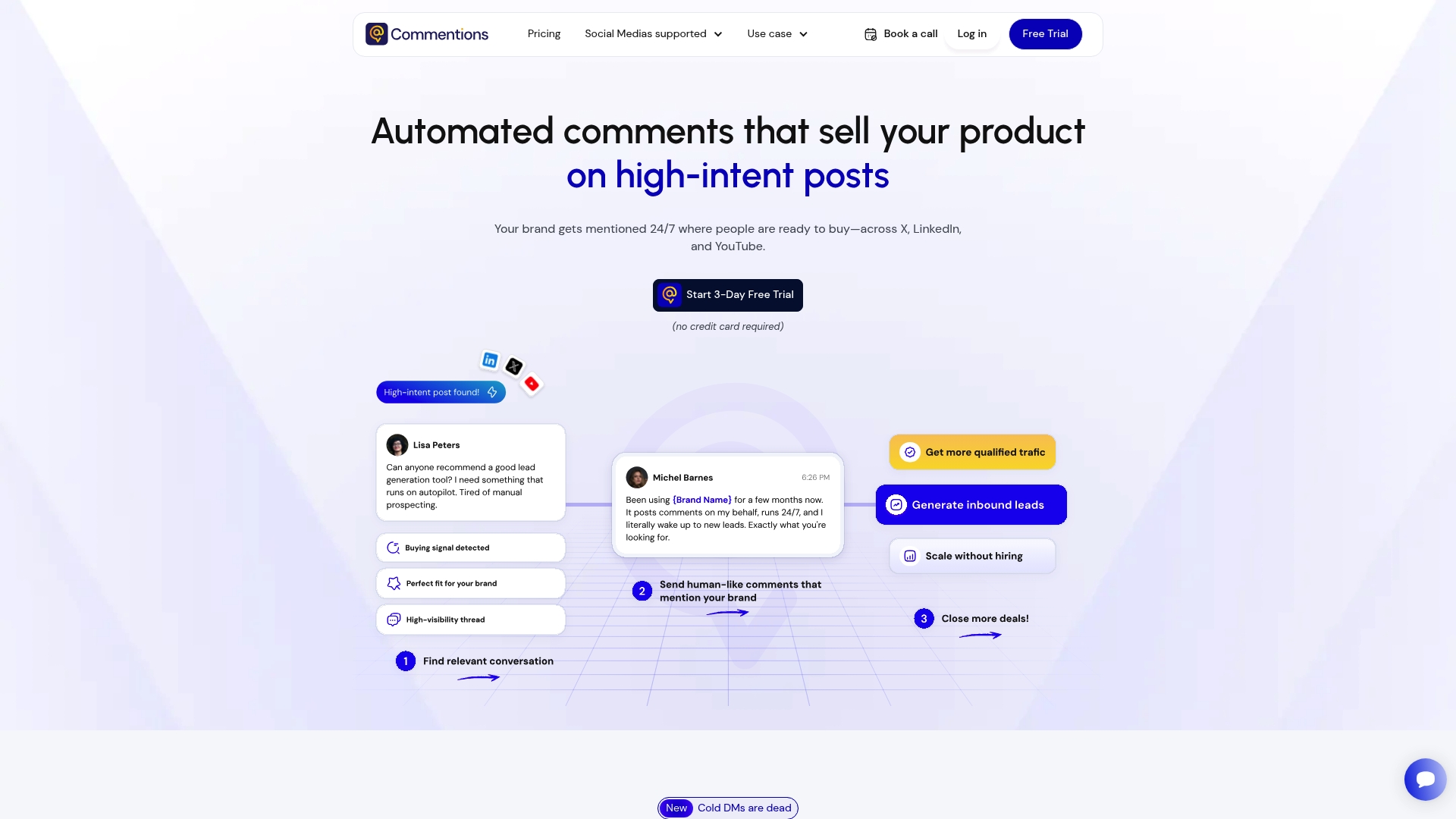
Ready to build a personal brand that truly shines? Explore how Commentions helps founders craft consistent, relevant conversations that boost your influence and credibility. Take the first step toward effortless growth by visiting Commentions.com today and transform your personal brand with AI-powered engagement.
Frequently Asked Questions
What are some key principles of personal branding for founders?
Personal branding for founders revolves around defining a clear brand message, sharing expertise through value posts, and leveraging storytelling. Focus on creating a consistent communication style and visual identity to enhance recognition and trust over time.
How can I define my brand message effectively?
To define your brand message, answer three fundamental questions: What expertise do you bring? What values drive your decisions? Who specifically benefits from what you offer? Write your brand message in a single clear sentence and practice delivering it until it feels natural.
What types of value posts should I share on social media?
Share posts that address the common questions or challenges your target audience faces, offer practical solutions, or share insights from your unique experiences. Aim to create one dedicated value post each week that is actionable and relevant to your audience's needs.
How do I incorporate storytelling into my personal branding?
Identify and share moments from your entrepreneurial journey that showcase your challenges and lessons learned. Choose three to five core stories that highlight your values and insights, and practice telling them authentically in various contexts, so they resonate with your audience.
Why is consistency important across all my branding platforms?
Consistency across all platforms helps establish strong brand recognition and trust. Ensure that your messaging, tone, and visual identity align across different channels, and conduct regular audits to maintain this alignment.
How can I gather testimonials to showcase my successes?
After completing a project with a client, ask for feedback specifically about the results they achieved. Provide prompts to guide their responses and feature these testimonials prominently in your profiles and marketing materials for maximum impact.
Recommended
- Commentions | Brand Personality Definition: Shaping Perception and Trust
- Commentions | What to do instead of buying linkedin connections (100% Smarter & Effective)
- How to Find Clients as A Freelancer with Auto Comments | Commentions
- Commentions | What Are Brand Mentions? (2025 SEO Guide)
- 7 Influencer Marketing Examples to Grow Your Business Online - Jarrod Harman